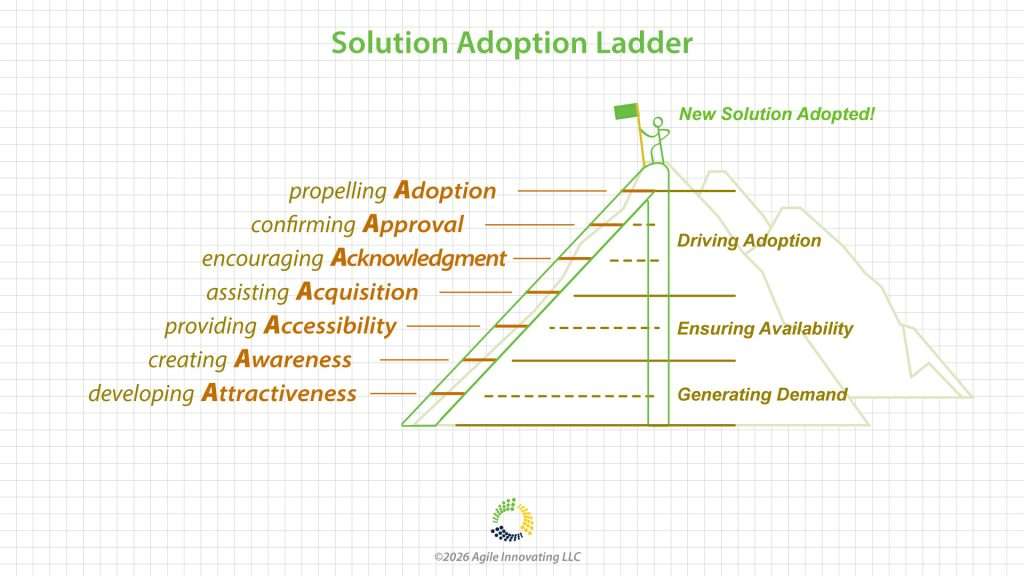

Innovation Adoption Ladder framework showing seven steps from attractiveness to adoption across three phases: generating demand, ensuring availability, and driving adoption

← Back to Blog Why Your Brilliant Innovation Fails (And It’s Not What You Think) The innovation graveyard is crowded: Harvard Business School research shows that 90-95% of startups fail to meet their original projections. You might think established companies with proven track records, substantial resources, and experienced teams fare better. They don’t. Academic research

Innovation Adoption Ladder: Engineering Adoption Read More »

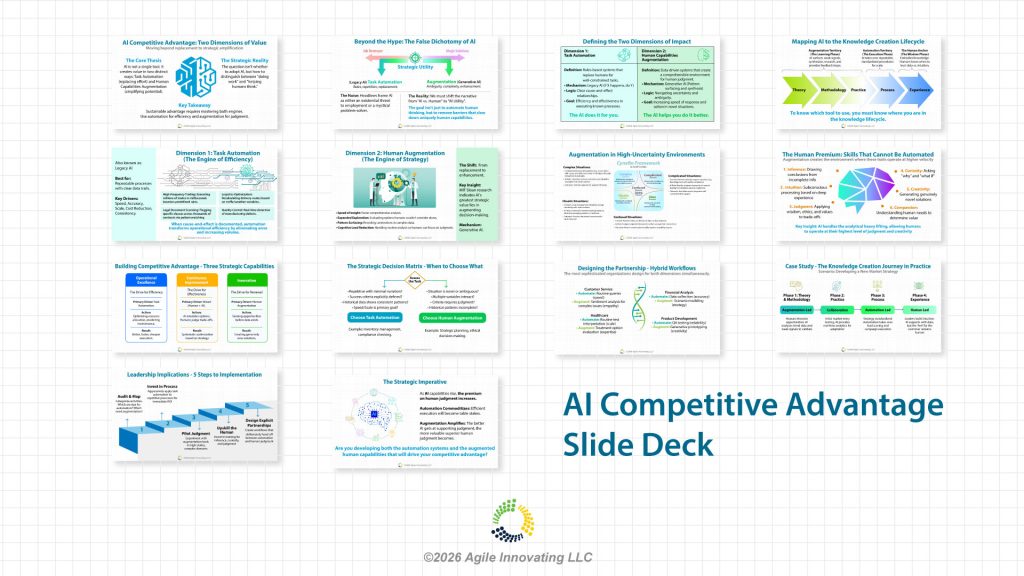
Axiom™ AI Competitive Advantage Slide Deck

← Back to Blog Introduction to AI Competitive Advantage Framework The AI competitive advantage framework provides a strategic lens for understanding how artificial intelligence creates value in two distinct dimensions: task automation and human capabilities augmentation. This visual guide breaks down the complete framework in 14 slides, making it easy to understand when to automate,

AI Competitive Advantage Framework: 14-Slide Visual Guide Read More »

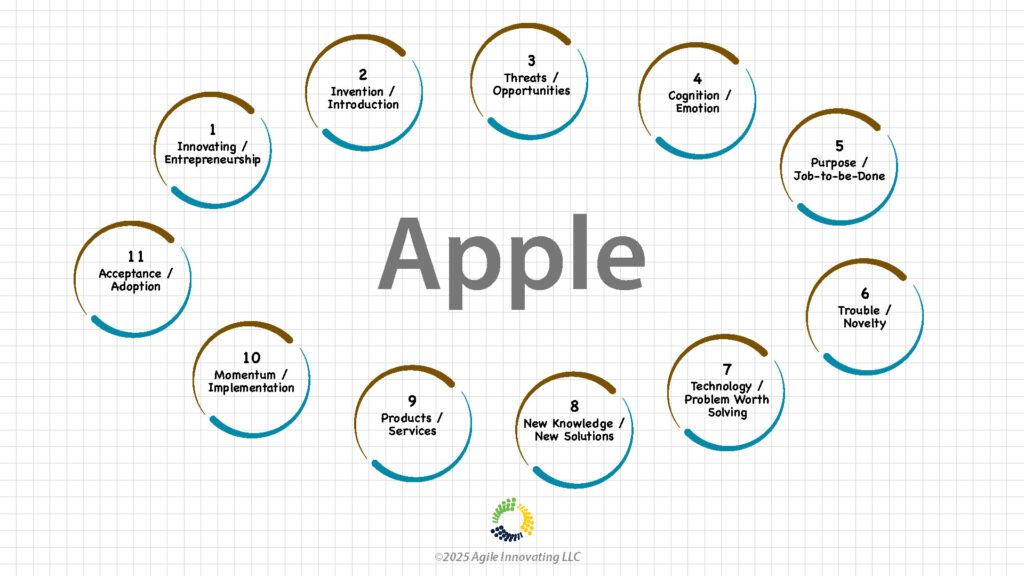
Innovation dualities framework diagram showing 11 circular duality pairs around Apple logo

← Back to Blog Understanding Innovation Dualities Innovation dualities represent the multi-dimensional, multi-factor reality of innovation success. Through decades of R&D and NPD management experience, I have identified 11 dimensions organized as two-factor variables that make the difference between a ripple and a splash in the marketplace. Successful sensemaking practices help organizations recognize these critical

11 Critical Innovation Dualities: The Apple iPhone Case Study Read More »

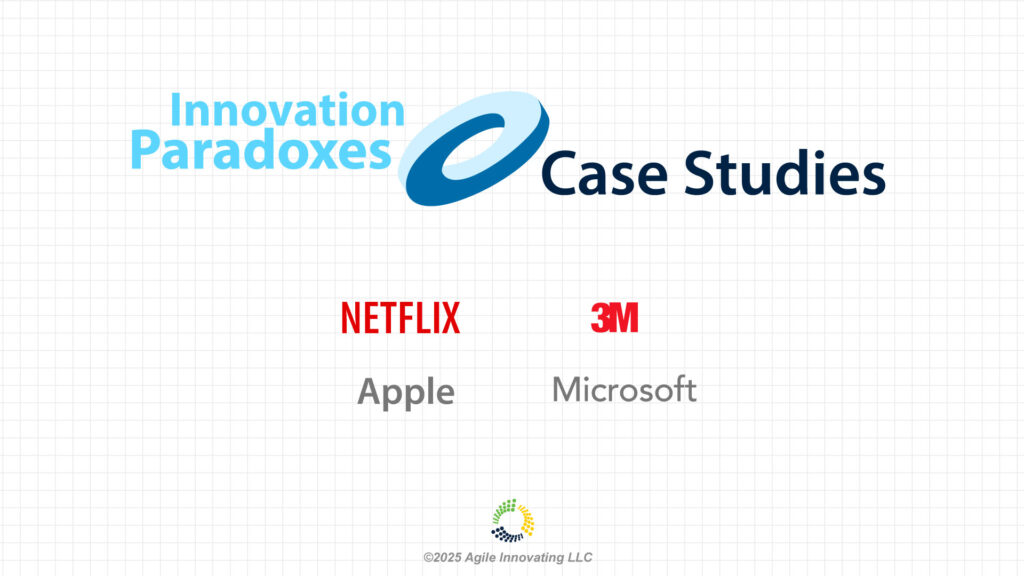
Innovation paradoxes case studies featuring Netflix, Apple, 3M, and Microsoft transformations

← Back to Blog Understanding Innovation Paradoxes in Strategic Programs Innovation paradoxes represent one of the most overlooked sources of uncertainty in business transformation. While most programs identify common uncertainties like User Situations and Problems Worth Solving, they rarely recognize how paradoxical relationships between key variables create hidden obstacles to success. The four innovation paradoxes

Four Innovation Paradoxes: Real-World Case Studies Read More »

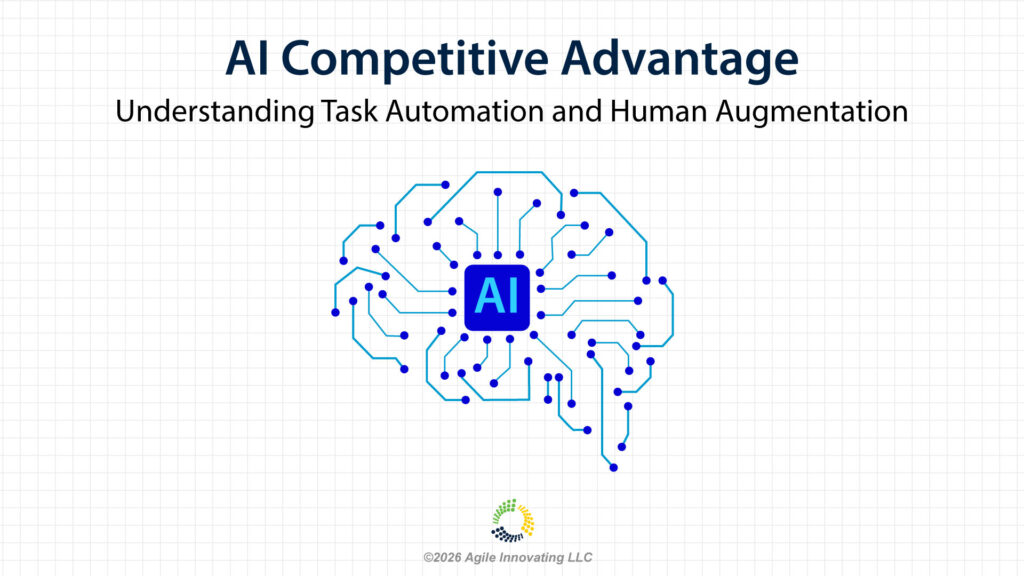
AI competitive advantage framework showing task automation and human augmentation with neural network brain design

← Back to Blog On this page Part 1: Introduction + Task Automation + Human Knowledge Framework AI competitive advantage is built when organizations understand the two fundamental ways artificial intelligence creates value: task automation and human capabilities augmentation. While headlines often portray AI as either a job-destroying threat or a magical solution, the reality

AI Competitive Advantage: Understanding Task Automation and Human Augmentation Read More »

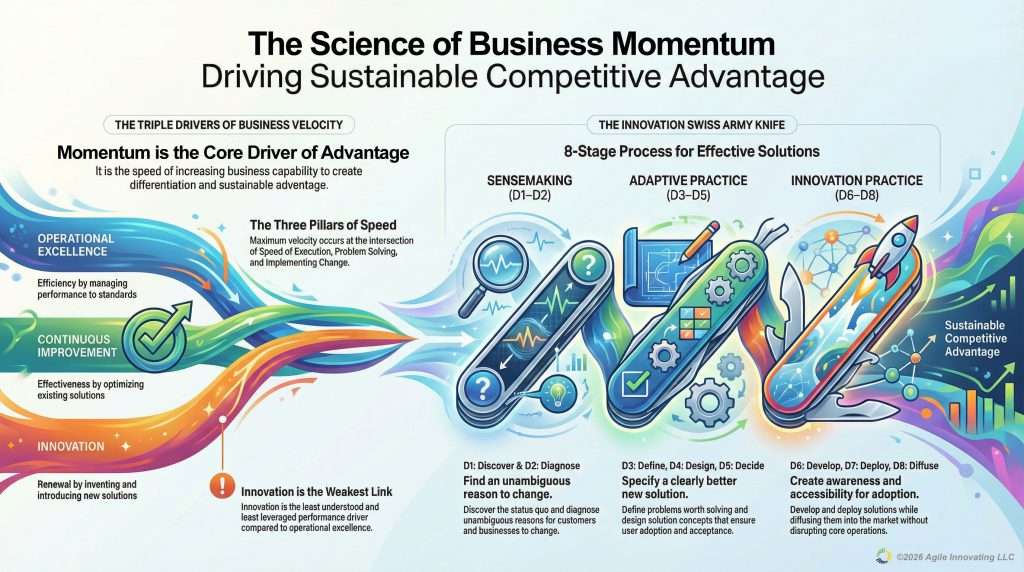
8D problem-solving framework diagram showing the eight-step process from discovery through market diffusion

← Back to Blog The 8D problem-solving framework transforms how organizations approach breakthrough innovation by replacing random idea generation with systematic problem-solving capability. Most companies chase that elusive eureka moment through endless brainstorming sessions and idea funnels, completely missing what actually drives successful innovation. The real engine isn’t brilliant ideas appearing out of nowhere—it’s a

The Essential 8D Problem-Solving Framework: Discovery to Diffusion Read More »

Innovation adoption framework showing seven-step Adoption Ladder from developing attractiveness through propelling adoption with three phases: generating demand ensuring availability and achieving adoption

← Back to Blog From Invention to Impact: The Innovation Adoption Framework An innovation adoption framework shifts focus from the flash of genius to the “yes, I’ll actually use this” moment—because innovation isn’t measured by what you invent, but by what gets adopted. Organizations that master adoption engineering don’t rely on luck, innovation champions, or

The Ultimate Innovation Adoption Framework: 7 Steps to Drive Adoption Read More »

Scroll to Top